
Above The Roar 50 Surfer Interviews Book By Warren Miller, Matt Warshaw, Rob Gilley
Shipping calculated at checkout
Only 1 in stock
Above The Roar 50 Surfer Interviews Book By Warren Miller, Matt Warshaw, Rob Gilley
ARCHIVE CURIOUS, 2-1-2026: I AM SURFER, HEAR ME ROAR
Hey All,
I've spent a lot of grim wheel-spinning hours over the years trying to come up with good or even halfway-decent titles for books and articles. I've wondered in fact if my shortcoming in this regard is what steered me to do Encyclopedia of Surfing and History of Surfing, where the title is moot. Above the Roar, from 1997, is the only book of mine with a good title, and only because I jobbed it out—when I told my father about the interviews book I was working on and that I was flailing for a title, he said, straight from the hip, not so much as a pause, "Yeah the title has to be catchy—Above the Roar, something like that."
Dad turned 97 last weekend, and over birthday pizza I reminded him of that story. He smiled and said, "I did that?" in a way that made it clear he did not remember the exact moment but knew full well that he'd done just what I said.
Above the Roar just went up on Archive, the whole thing, cover to cover, and I've posted the book's intro, below, to get you started. But first a quick word on the amazing dom-sub set piece featuring Gary Elkerton and Richard Woolcott, which took place at the 1984 World Amateur Surfing Championships post-event banquet. It seemed a little odd at the time, but totally great, that the event was sponsored by Stroh's Beer, even though the average age of world title competitors, hundreds of surfers from around the globe, was probably 17 or 18. I don't think any of us got really hammered at the banquet, but everybody—old (as in early- or mid-20s) and young, very young—was drinking plastic cups of free Stroh's, and no questions asked.
Anyway, and without further ado . . .
[Above the Roar, Introduction, 1997]
Thinking back on all the interviews I've recorded over the years, the metaphor that comes to mind is—sex work. The scripted remarks. The odd combination of excitement and tedium. The mimicry of what is, in most circumstances, the most natural of acts. The generally grim sense afterward of service rendered. Me cruising for action. Interview subjects (some, at least) saying I screwed 'em.
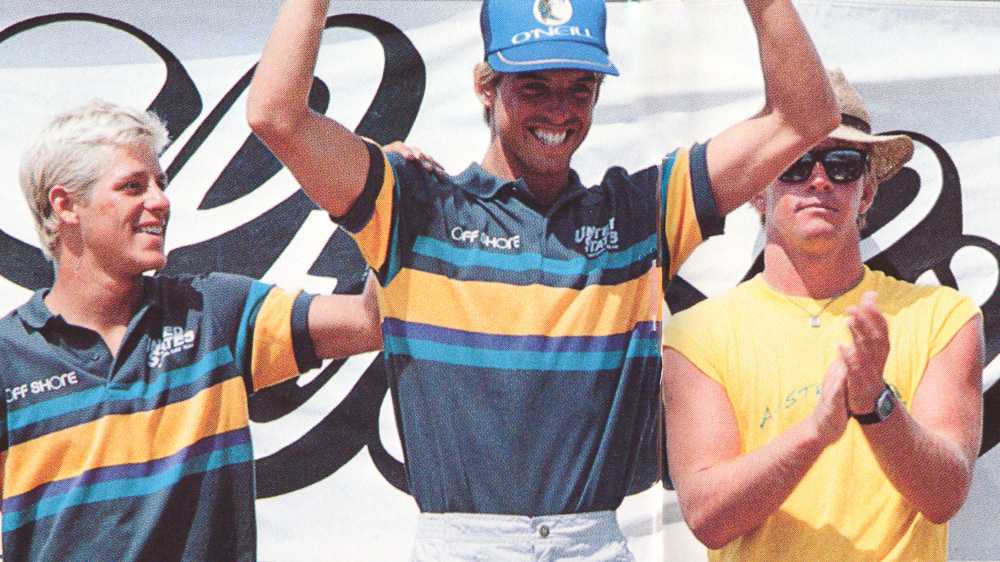
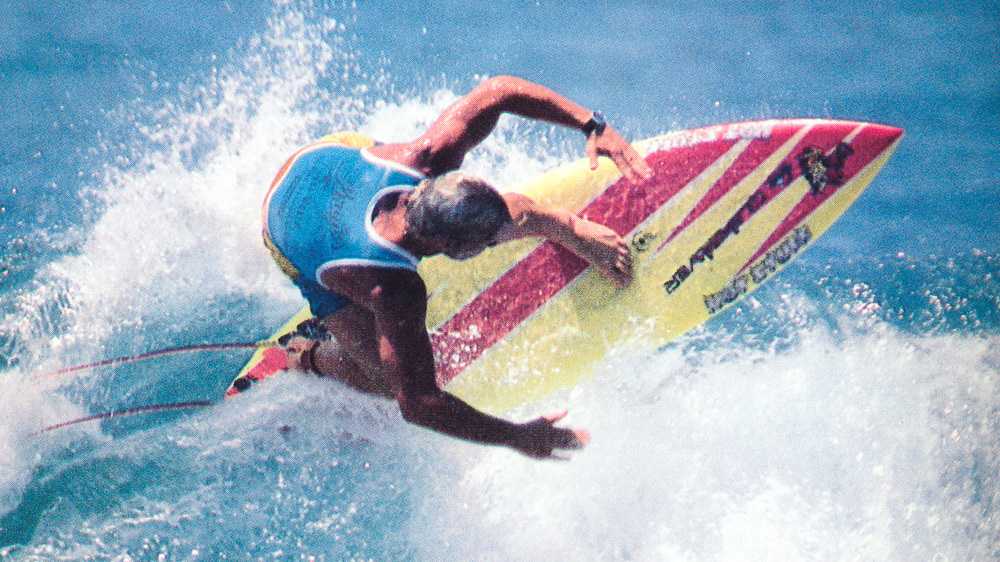
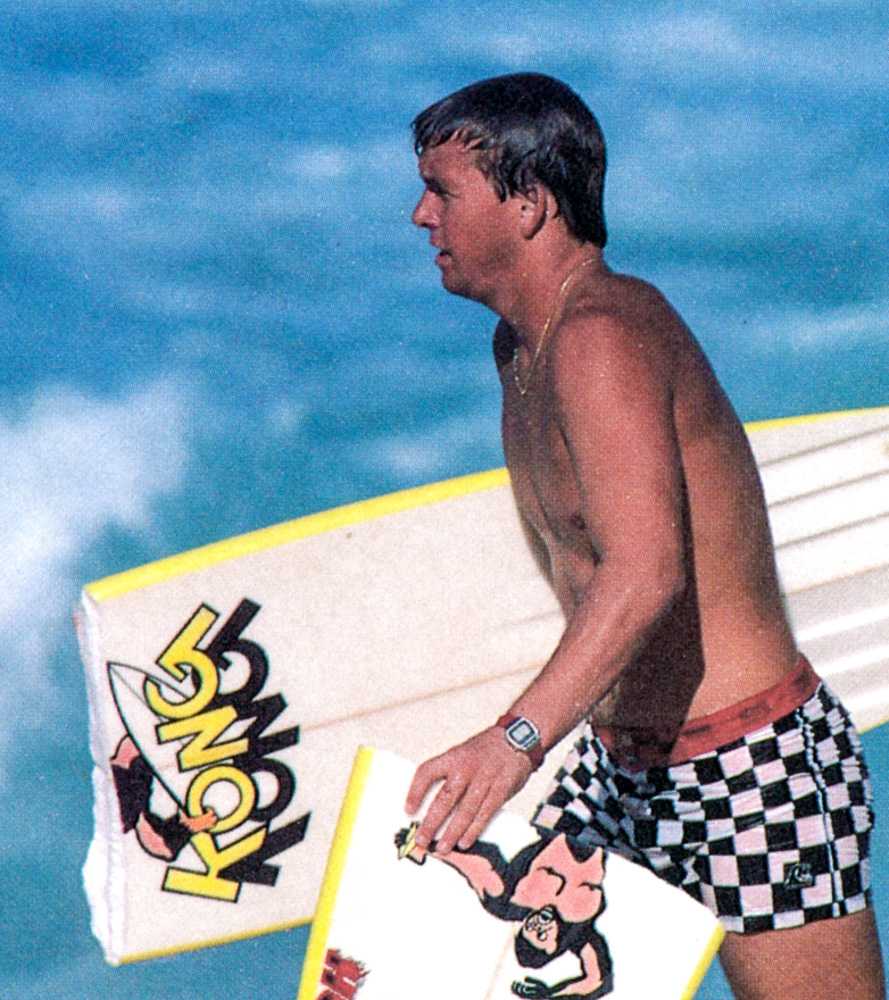
Except now and then the process would shoot off into areas so interesting and satisfying that it couldn't just take place as a for-hire exchange. This happened to me for the first time in 1984, three months after I'd taken an entry-level staff position with a regional West Coast surf magazine called Breakout (horrible name choice for a teen-audience magazine in those pimply pre-Accutane days) and was assigned to cover the amateur world titles in Huntington Beach. Six hours after the final heat, I was at the Red Robin restaurant for the presentation banquet, sitting at a table with most of the contest winners. The Americans were coming off a tremendous day, winning the team title, and local boy Scott Farnsworth was the new world champ—largely because teammate Richard Woolcott had blocked the late-charging and heavily favored Australians. In the early rounds, Woolcott made an accidental but vital contribution when he rode behind the already-famous Gary "Kong" Elkerton, causing the beefy Aussie teen to pick up an interference that knocked him out of world title contention. As Woolcott explained to us at the Red Robin, Elkerton had been outraged at the drop-in call, and had in fact threatened Woolcott with bodily violence—his exact words being, "I'll wring your neck and kick your ass." But as Woolcott explained at the table that night, relief playing across his choir-boy features, Elkerton had made a friendly gesture or two near the end of the contest.
So I got up and walked across the room, introduced myself to Elkerton, and asked if he'd follow me back to the Americans' table, with the idea that I would record for Breakout readers a brotherly little post-contest scene of international good sportsmanship. Elkerton was agreeable. We angled back across the restaurant, toward Woolcott, Farnsworth, and the rest. I hit "play" and set the recorder down on the linen.
ME: Here's Richard Woolcott, a man you had words with. What happened with that?
ELKERTON: Well, there was a bit of a disagreement. Like, ahhh look [turns to Woolcott], you've got to paddle out the back at Sunset, brah, before you prove to me that you beat me. [Two or three seconds of silence.]
WOOLCOTT: All I can say, man . . .
ELKERTON: You prove it to me.
WOOLCOTT: [Stammering] Look, I've got pictures on my wall of you; I love the way you surf. I was going down the line, you accidentally dropped in . . .
ELKERTON: I'm only telling you, I'll help you out, man. I'll help you paddle out the back there.
WOOLCOTT: I don't want any bad vibes. I was bummed about the interference. I wish it was somebody else.
ELKERTON: I know. I'm just saying, if you need help paddling out the back at Sunset, man, I'll help you—as far out the back as you want to go.
WOOLCOTT: You'll help?
ELKERTON: I'll paddle as far out as you want to go.
WOOLCOTT: Is that good or bad?
EVERYONE: That's good!
ELKERTON: [Picks up the tape recorder and gestures theatrically as he moves onto what he views as a bigger problem.] There's one little thing I disagree about. Stroh's Brewery sponsored this tournament, and I'm absolutely fucking spewing that there's no fucking beers left at this thing. Where's the beers!?
WOOLCOTT: [Holds his cup up.] Here. Why don't we drink this together?
ELKERTON: Ah, man, I'd love to. You drink half and I'll drink half.
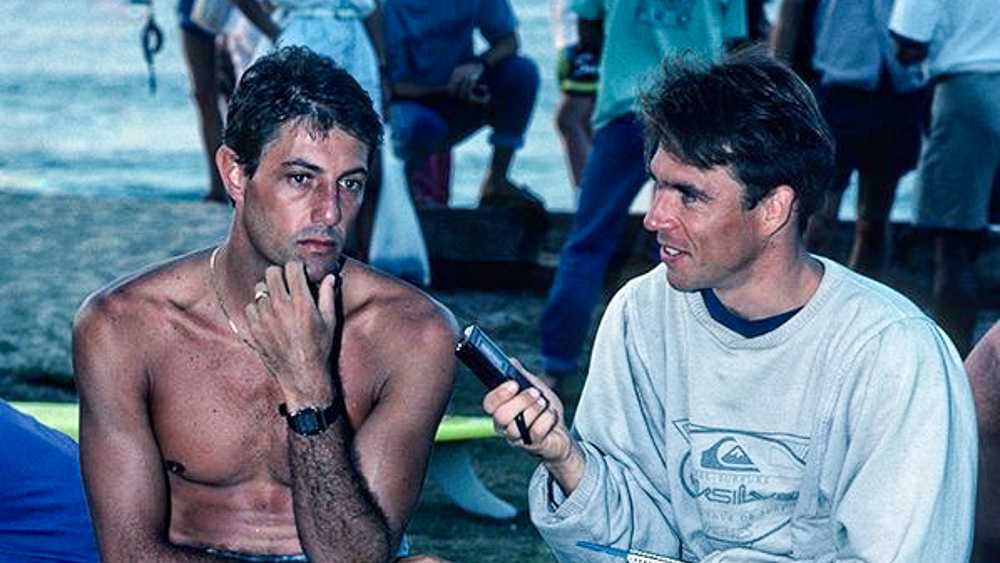
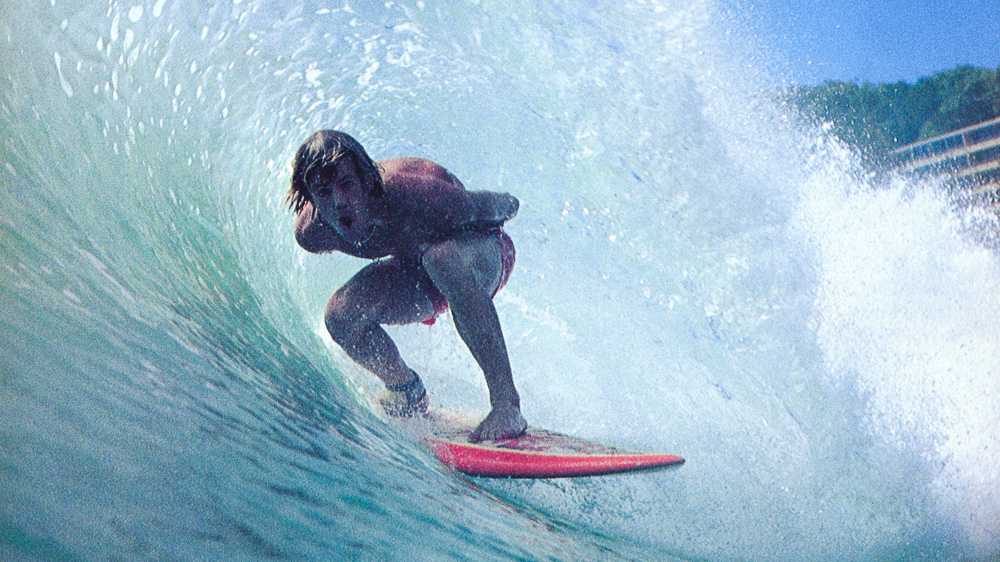
In-person interviews are best. This was the primary lesson learned at the Red Robin, and it's stayed with me throughout the 500-or-so conversations I've recorded since then. Phone interviews have their place—you don't have to worry about eye contact and body language, plus it's easier to jot down notes and questions—but they never produce the hit that comes from a good face-to-face meeting. A few years ago, in a crowded San Francisco airport cafeteria, Wayne Bartholomew got so transported as he told me about surfing Kirra that he came out of his chair and hunched over into a tube crouch. A year after that, I watched and listened as the normally stone-faced Joey Cabell sang out loud in his car, high notes and all. When Richie Collins explained the mental health benefits of masturbation, sitting across the desk from me inside the offices of Surfer magazine, he was good enough to pantomime the act. To really do the interview right, you need to be in the same room, and you need to allow the conversation to move at its own pace. We were two hours into our talk before Collins got his fist pumping in the air.
The non-vocal components of an in-person conversation, in fact, are so important that I much prefer to write surfer profiles, rather than straightahead Q&A pieces. I want all forms of context at my disposal, including facial expression, mood, ambient sounds, supporting/dissenting opinion, weather, smell, history and statistics. The idea is to get as close as possible to a 3D presentation, and I've almost always looked at the interview session not as an end in itself, but as groundwork for something bigger.
But there is something to be said for the Q&A format. It hooks you right in, for one thing. After paging through surf magazines more or less continuously for 28 years, when I come across an interview with a favorite surfer I will always stop and read it. Profiles, essays and columns will usually get put off until the second go-through.
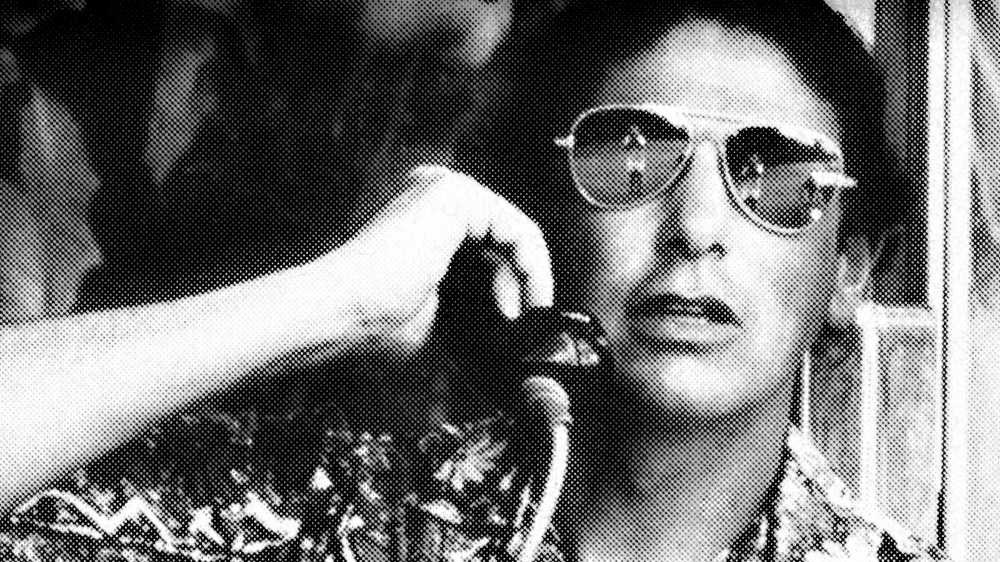
I especially liked Drew Kampion's monthly "Conversations" column, which ran in Surfing for three years, starting in 1979. Kampion by that time had been on the scene for more than 10 years. He knew everyone, was respected, was a star in his own right in fact, plus he had a great sense of humor. Surfers loved talking to Drew and often went further with him than they did with other interviewers. There was editing involved, of course, but in general everyone was working without a net, and it often made for a great read. Here's a short excerpt from Drew's 1979 conversation with Mark Richards:
KAMPION: I thought your surfing looked really good in the Cuervo Classic and in the Pipe Masters.
RICHARDS: Actually, I thought I surfed lousy in the Cuervo. Like, in the first heat I did all the right moves and maybe it fits together all right, but mentally I didn't feel as on as I could. You know how it is. Some days you feel like you can crush brick walls. Other days you feel like a pussy, kind of.
Another thing. It was always Kampion who ended the talk, rather than the famous surfer he was speaking with. "All right, Rabbit, good talking to you." "Anyway, Nat, I gotta go." "Okay, Dane, I'll say goodbye for now." Maybe you have to be a journalist to fully appreciate this neat little reverse on the usual state of play; the suggestion being that it was Kampion, not the surfer, with the full schedule that needed to be looked after—hey, gotta run, but thanks for your time!
If I've made any kind of discovery over the years, it's that surfing itself, for most people, is easier to talk about when it rubs up against another subject. So for Above the Roar, the big question, right after settling on 50 interviews as a nice, round number, was: could there be an equal number of more or less distinct, surf-related topics?
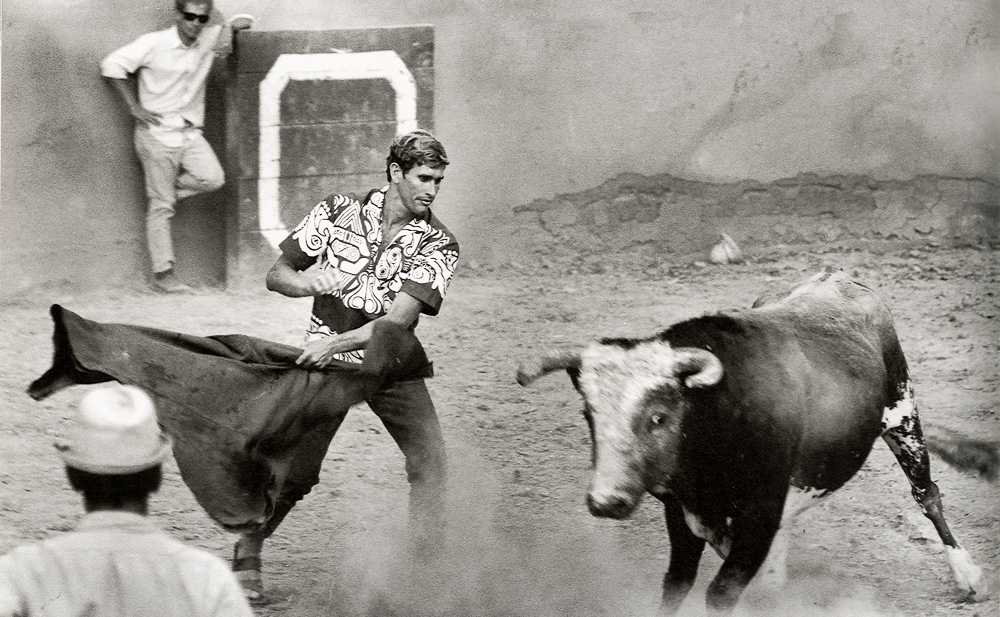
Sure. Easy, in fact. Martin Potter on surfing and music. Lisa Andersen on surfing and motherhood. LeRoy Grannis on surfing in California before World War II. Jeff Hakman on Jock Sutherland. Art Brewer on Ron Stoner. For the surfers featured here, and for consecrated surfers everywhere, the sport really does touch on virtually every aspect of life. And not just in the cliche "life is a wave—ride it" sense, but in more interesting, particular ways. Joey Cabell, for example, brought a surfing consciousness into the ring when he tried his hand at bullfighting in Lima, Peru. Bullfighting in the late '50s and early '60s was often mentioned as analogous to surfing (surfer and matador both trying to stand in stylish proximity to a deadly foe), and Cabell, during day trips to northern Baja, had made the surfer's obligatory stop at the Tijuana bullring to watch the afternoon's la fiesta brava.
Another thing I learned was that the best parts of the best interviews almost never focus on the actual riding of waves. In Above the Roar, for example, North Shore surfer Ken Bradshaw is the only person who spends any real time talking about a single-wave occurrence. Writer Dan Duane has pointed out that the sport is really more concerned with longer sequences of experiences and that a breaking wave, or a set of waves, doesn't much lend itself to the narrative form. Add to this the fact that the dramatic ride (or wipeout) will always be better presented through photos or movies. At best, a spoken description can lend support (as with Wayne Bartholomew's great voice-over in Free Ride, when he describes his movement through a dredging Balinese barrel), but the cliches usually drop like beads onto a string when a surfer recalls his or her great on-the-mountain experiences.
Finally, after all those interviews, what do I think about surfers? Well, it's hard to argue with Barton Lynch (although I did at the time, in 1988), who described his wave-riding fellows as "self-righteous, cocky and judgmental." There is a particular air of smugness too common to surfers, which can be off-putting to say the least. But I can also view the surfer's arrogance as a waste product of an otherwise healthy belief (shared by me) that surfing indeed belongs to a different and higher order than other sports; that it probably does in fact extend beyond the boundaries of sport altogether. Smugness in young surfers will eventually, hopefully, turn into a kind of confidence. This is what I try to see in surfers today—a particular satisfaction with their lives. Mark Foo once told me that "surfers are happy people because they always know what they want." This almost seems too simple to be worthwhile. Except it's true. And nobody else, as far as I know, has stated it so directly.
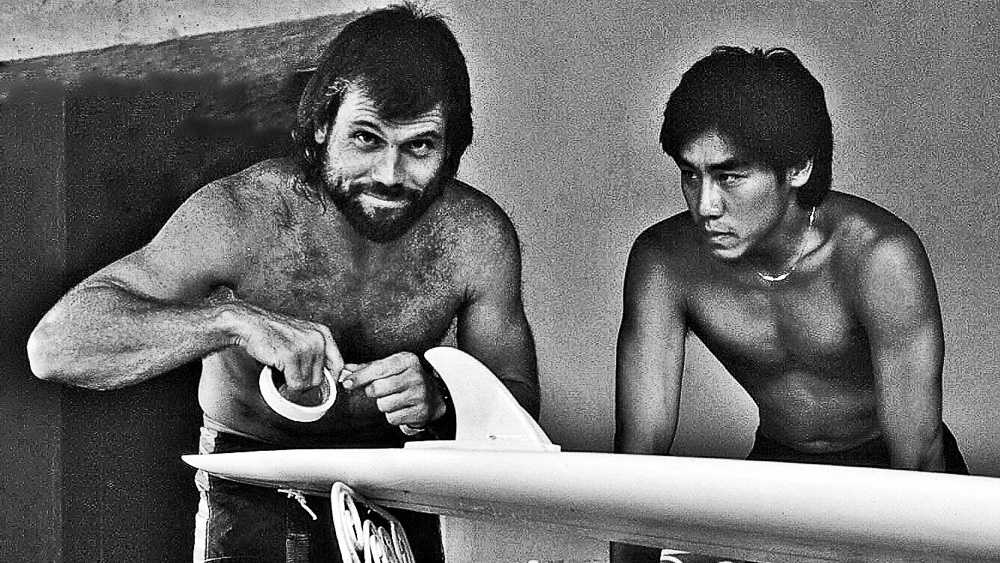
From knowing what they want, surfers have a certain kind of attractive energy. After Wayne Bartholomew went into his tube stance at the San Francisco airport, racing through an imaginary Kirra section, he straightened back up and said, "I'm jumping out of my skin right now thinking about it!" Fifteen minutes later I was in my car, driving home, tape recorder almost glowing on the seat next to me, buzzing partly because of what Bartholomew had said and partly because I was sure I could pass the buzz along.
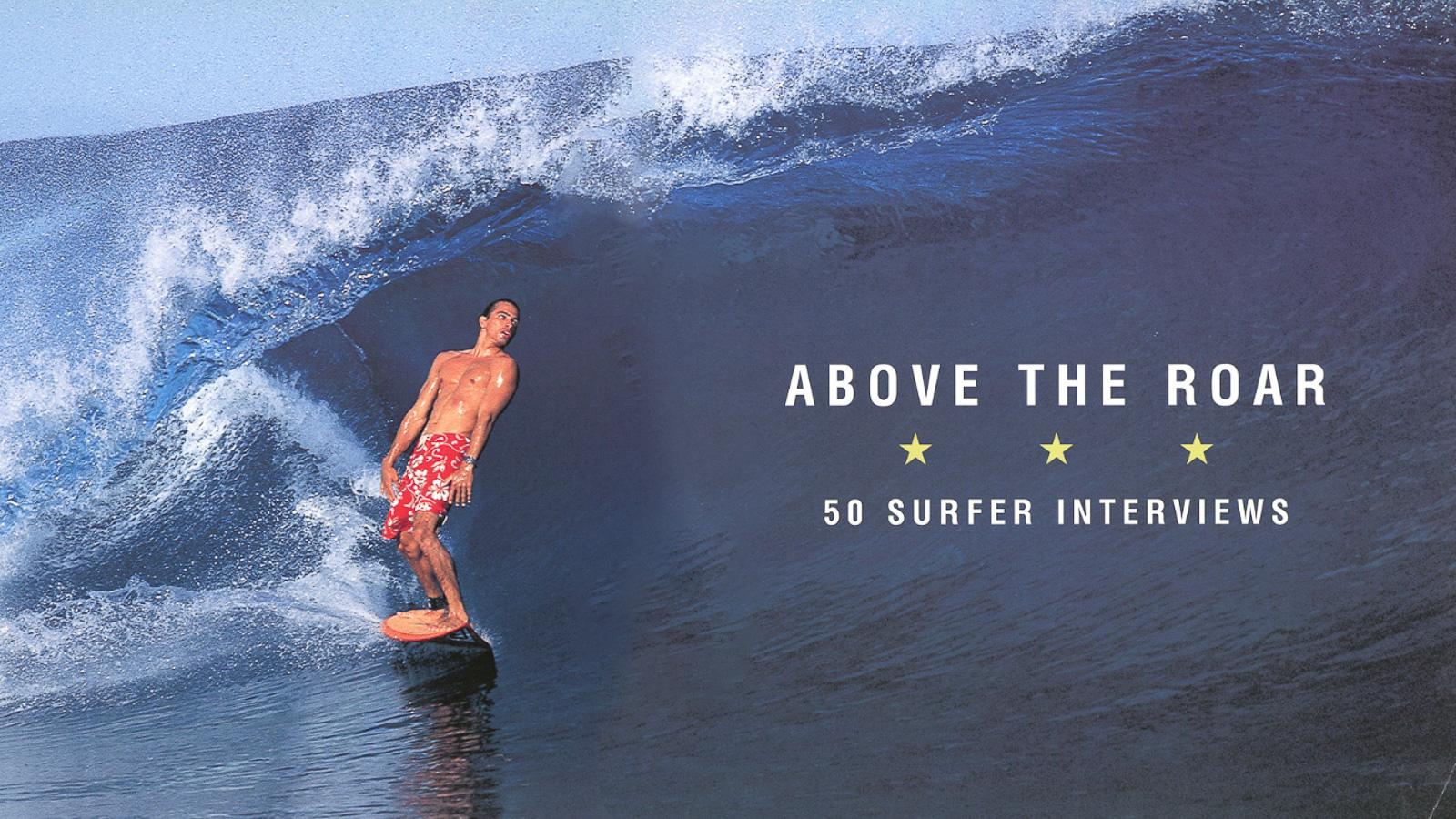
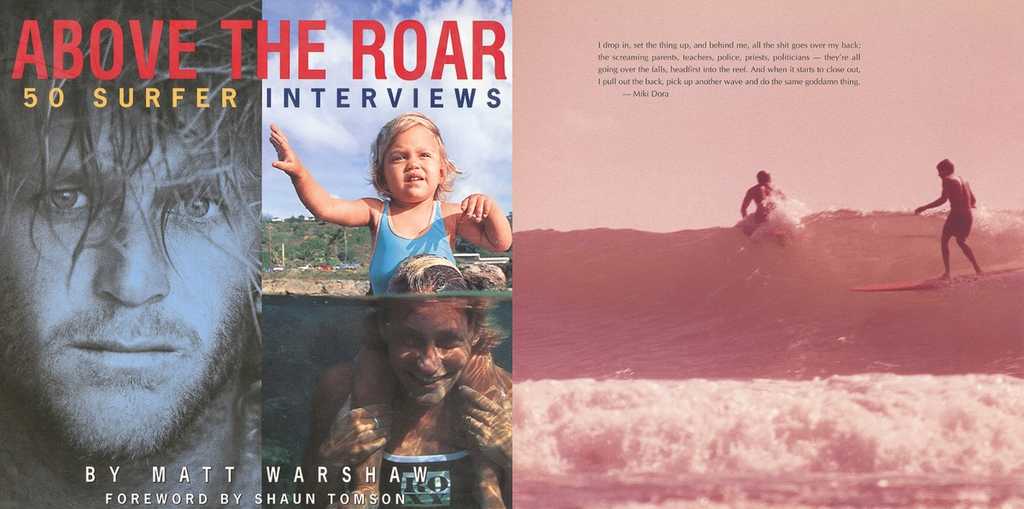
[Photos, top to bottom: Kelly Slater, Cloudbreak, 1995, photo by Tom Servais. Above the Roar portraits of Martin Potter and Lisa Andersen by Art Brewer. Mickey Dora photo by Ron Stoner. 1984 world amateur champion Scott Farnsworth, flanked by Richard Woocott, left and Gary Elkerton. Photo by Chuck Schmidt. Elkerton surfing in the '84 world titles, photo by Rob Brown. Elkerton on the North Shore, 1983, photo by Dan Merkel. Matt Warshaw interviewing Shaun Tomson in 1986, photo Tom Servais. Wayne Bartholomew, Gold Coast, 1982, photo by Peter Crawford. Drew Kampion, 1981. Joey Cabell, bullfighting in Peru, 1967, photo by Leo Hetzel. Ken Bradshaw, left, and Mark Foo, 1983, photo by Mike Moir]
About Us
Surfers Warehouse™

Doug and Sara Lindsay

Shipping
Surfers Warehouse Shipping Methods & Timelines
Economy/Ground Order Processing: Allow 1-2 business days (excluding weekends & all U.S. federal holidays) for processing before order ships from our warehouse.
US PO Box Shipping: PO Boxes & APO/FPO addresses are limited to only Standard shipping method with USPS. UPS Ground or Expedited shipping methods are unavailable at this time for PO boxes and other specialized shipping addresses.
Privacy Policy
surferwswarehouse.com Privacy Policy
This Privacy Policy describes how your personal information is collected, used, and shared when you visit or make a purchase from surferswarehouse.com (the “Site”).
PERSONAL INFORMATION WE COLLECT
When you visit the Site, we automatically collect certain information about your device, including information about your web browser, IP address, time zone, and some of the cookies that are installed on your device. Additionally, as you browse the Site, we collect information about the individual web pages or products that you view, what websites or search terms referred you to the Site, and information about how you interact with the Site. We refer to this automatically-collected information as “Device Information.”
We collect Device Information using the following technologies:
- “Cookies” are data files that are placed on your device or computer and often include an anonymous unique identifier. For more information about cookies, and how to disable cookies, visit http://www.allaboutcookies.org.
- “Log files” track actions occurring on the Site, and collect data including your IP address, browser type, Internet service provider, referring/exit pages, and date/time stamps.
- “Web beacons,” “tags,” and “pixels” are electronic files used to record information about how you browse the Site.
Additionally when you make a purchase or attempt to make a purchase through the Site, we collect certain information from you, including your name, billing address, shipping address, payment information (including credit card numbers , email address, and phone number. We refer to this information as “Order Information.”
When we talk about “Personal Information” in this Privacy Policy, we are talking both about Device Information and Order Information.
HOW DO WE USE YOUR PERSONAL INFORMATION?
We use the Order Information that we collect generally to fulfill any orders placed through the Site (including processing your payment information, arranging for shipping, and providing you with invoices and/or order confirmations). Additionally, we use this Order Information to:
Communicate with you;
Screen our orders for potential risk or fraud; and
When in line with the preferences you have shared with us, provide you with information or advertising relating to our products or services.
We use the Device Information that we collect to help us screen for potential risk and fraud (in particular, your IP address), and more generally to improve and optimize our Site (for example, by generating analytics about how our customers browse and interact with the Site, and to assess the success of our marketing and advertising campaigns).
SHARING YOUR PERSONAL INFORMATION
We share your Personal Information with third parties to help us use your Personal Information, as described above. For example, we use Shopify to power our online store--you can read more about how Shopify uses your Personal Information here: https://www.shopify.com/legal/privacy. We also use Google Analytics to help us understand how our customers use the Site--you can read more about how Google uses your Personal Information here: https://www.google.com/intl/en/policies/privacy/. You can also opt-out of Google Analytics here: https://tools.google.com/dlpage/gaoptout.
Finally, we may also share your Personal Information to comply with applicable laws and regulations, to respond to a subpoena, search warrant or other lawful request for information we receive, or to otherwise protect our rights.
BEHAVIOURAL ADVERTISING
As described above, we use your Personal Information to provide you with targeted advertisements or marketing communications we believe may be of interest to you. For more information about how targeted advertising works, you can visit the Network Advertising Initiative’s (“NAI”) educational page at http://www.networkadvertising.org/understanding-online-advertising/how-does-it-work.
You can opt out of targeted advertising by:
FACEBOOK - https://www.facebook.com/settings/?tab=ads
GOOGLE - https://www.google.com/settings/ads/anonymous
BING - https://advertise.bingads.microsoft.com/en-us/resources/policies/personalized-ads
Additionally, you can opt out of some of these services by visiting the Digital Advertising Alliance’s opt-out portal at: http://optout.aboutads.info/.
DO NOT TRACK
Please note that we do not alter our Site’s data collection and use practices when we see a Do Not Track signal from your browser.
YOUR RIGHTS
If you are a European resident, you have the right to access personal information we hold about you and to ask that your personal information be corrected, updated, or deleted. If you would like to exercise this right, please contact us through the contact information below.
Additionally, if you are a European resident we note that we are processing your information in order to fulfill contracts we might have with you (for example if you make an order through the Site), or otherwise to pursue our legitimate business interests listed above. Additionally, please note that your information will be transferred outside of Europe, including to Canada and the United States.
DATA RETENTION
When you place an order through the Site, we will maintain your Order Information for our records unless and until you ask us to delete this information.
MINORS
Purchases made on this site must be from those who have their own payment information or, if a minor, have the expressed consent of their parent or guardian to make a purchase in their own name.
CHANGES
We may update this privacy policy from time to time in order to reflect, for example, changes to our practices or for other operational, legal or regulatory reasons.
CONTACT US
For more information about our privacy practices, if you have questions, or if you would like to make a complaint, please contact us by e-mail at support@surfereswarehouse.com or by mail using the details provided below:
509 Cypress Ave, Venice, FL, 34285, United States